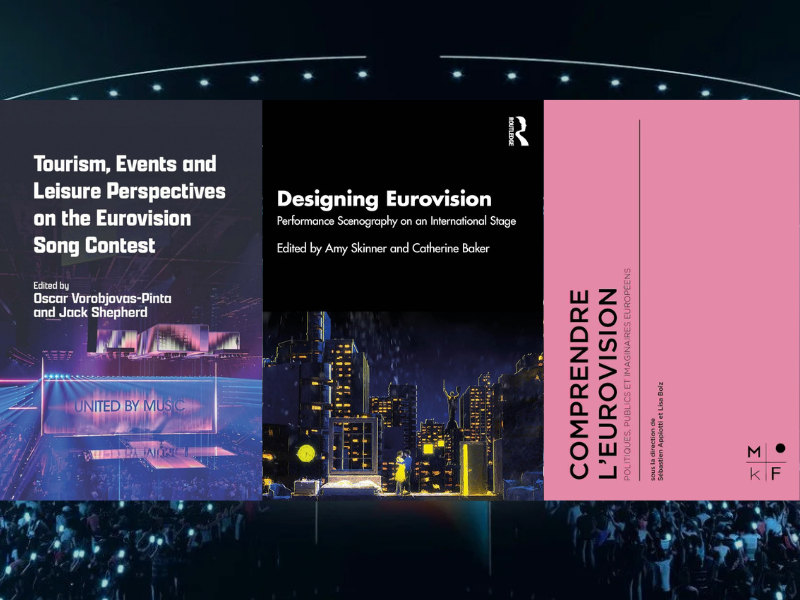

The landscape of international research on the Eurovision Song Contest (ESC) is structured by several major initiatives, among which the Eurovisions International Conference holds a central position. Founded in 2018, this academic event takes place annually during the same week and in the same host city as the contest itself.
The primary objective of the Eurovisions Conference is to open up academic research by creating an inclusive, horizontal space for dialogue. The organizers prioritize dynamic, interactive, and accessible formats without sacrificing scientific rigor. The core principle is to bridge the gap between diverse profiles: scholars from the humanities and social sciences (musicology, sociology, political science, media studies), industry professionals (broadcasters, journalists, artists), and members of the fan communities. For the network, the ESC should not be analyzed in isolation or treated superficially; rather, it serves as a sophisticated lens to examine broader global sociopolitical and media transformations, while offering participants new professional or theoretical perspectives on their own fields of work.
Vienna 2026: A 9th Edition Dedicated to Media Public Value
On May 12 and 13, 2026, the 9th edition of the conference took place in Vienna, Austria, hosted by the Department of Cultural Management and Gender Studies at the University of Music and Performing Arts Vienna. Organized to coincide with the 70th anniversary of the contest, the event focused closely on the core concept of public value.
In an era marked by digital fragmentation, technological disruption, and growing economic or political pressures on public service broadcasting, speakers questioned the current role and response of the European Broadcasting Union (EBU). Panels addressed a wide range of topics, including technical innovations (from the shift of analogue television to streaming platforms and immersive staging), ongoing debates surrounding representation, inclusion, and democracy, as well as the management of political contestations and boycotts. As in previous years, the event featured the Eurovisions Science Slam, a science communication format where early-career researchers and PhD candidates present their cutting-edge ESC research from diverse disciplinary perspectives in a concise, engaging way.
Anchoring Eurovision Studies in Oxford University Press Scholarship
The Eurovisions Research Group’s recent work has also achieved significant editorial recognition. The Oxford Handbook of Pop Music, a prestigious reference volume published by Oxford University Press, includes this year a dedicated chapter specifically examining the musicology of the contest.
Entitled “Beautiful Song”: Is the Music Presented at the Eurovision Song Contest a Musical Form in Its Own Right?, the chapter is co-authored by four active members of the research group: Irving Wolther, Sofia Vieira Lopes, Carla Figueira, and Isabel Campêlo. The authors look past Eurovision’s identity as a television spectacle to analyze the core of its sonic production. By investigating recurring compositional strategies, structural conventions, and aesthetic frameworks shaped by the contest’s rules and competitive environment over several decades, the study evaluates whether Eurovision music exhibits the characteristics of an autonomous musical genre. This publication represents a major milestone in the ongoing academic legitimization of Eurovision Studies within global popular music research.